The boundary of our solar system is a turbulent and dynamic region where the Sun's influence wanes, and interstellar space begins to dominate. Recent observations of shock collisions at the heliopause—the outer edge of the heliosphere—have provided unprecedented insights into the complex interactions between solar wind plasma and the interstellar medium. These findings are reshaping our understanding of how the Sun's protective bubble interacts with the galaxy.
The Heliopause: A Cosmic Frontier
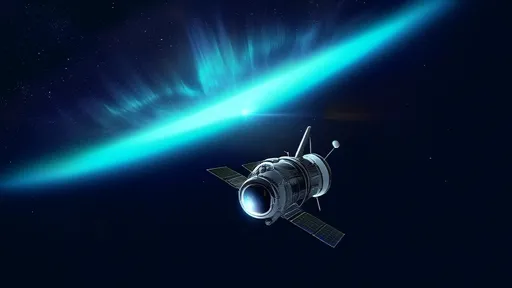
The heliopause marks the region where the solar wind, a stream of charged particles emanating from the Sun, is slowed and heated by the pressure of interstellar plasma. This boundary is not static but fluctuates in response to variations in solar activity and the local interstellar environment. Recent data from spacecraft like Voyager 1 and Voyager 2, which crossed the heliopause in 2012 and 2018 respectively, have revealed that this region is far more dynamic than previously thought.
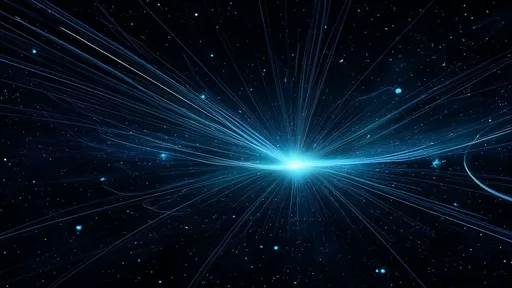
One of the most striking discoveries is the occurrence of shock waves at the heliopause. These shocks are produced when fast-moving solar wind collides with slower-moving or stationary interstellar plasma. The resulting compression and heating of plasma create detectable signatures that scientists are now able to study in detail. These observations are critical for understanding how energy is transferred across the boundary and how it affects the structure of the heliosphere.
Shock Collisions and Their Implications
Shock collisions at the heliopause are not merely academic curiosities—they have real consequences for the entire solar system. These events can accelerate particles to high energies, creating anomalous cosmic rays that penetrate deep into the heliosphere. Some researchers speculate that these particles could influence Earth's atmosphere and even climate, though the mechanisms remain poorly understood.
Moreover, the behavior of these shocks provides clues about the nature of the interstellar medium itself. By analyzing how shocks propagate and dissipate, scientists can infer the density, temperature, and magnetic field strength of the plasma beyond our solar system. This information is invaluable for models of galactic cosmic ray modulation and for predicting how the heliosphere might evolve over time.
Challenges in Observing the Heliopause
Studying the heliopause is no easy feat. The vast distances involved mean that only a handful of human-made objects have ever reached this region. Even fewer carry instruments capable of measuring plasma properties directly. Most of what we know comes from indirect measurements, such as fluctuations in cosmic ray counts or shifts in the Sun's magnetic field.
Adding to the complexity, the heliopause is not a uniform boundary. It is wrinkled and distorted by the relative motion of the Sun through the galaxy and by the uneven pressure of interstellar winds. This makes it difficult to predict where and when shock collisions might occur, requiring continuous monitoring and sophisticated modeling to interpret the data.
Future Missions and Unanswered Questions
Despite the challenges, the scientific community is pushing forward with new missions designed to explore the outer heliosphere. Proposed missions like the Interstellar Probe aim to travel beyond the heliopause, carrying advanced instruments to measure plasma, magnetic fields, and energetic particles in situ. Such missions could finally answer long-standing questions about the shape and stability of the heliosphere.
Key mysteries remain, such as why Voyager 1 and Voyager 2 encountered different conditions at the heliopause despite crossing it just six years apart. Some theories suggest this variability is due to changes in solar wind output, while others point to asymmetries in the interstellar medium. Resolving these questions will require not only more data but also better theoretical frameworks to explain the observations.
The Bigger Picture
Understanding shock collisions at the heliopause is more than an exercise in space physics—it’s a window into how stars interact with their galactic environment. Our Sun’s heliosphere is just one example of astrospheres surrounding other stars, and studying it helps us generalize about stellar wind bubbles throughout the galaxy. This knowledge could eventually inform our search for habitable exoplanets, as a star’s astrosphere plays a crucial role in shielding planets from harmful cosmic radiation.
As we continue to probe the edges of our solar system, each new discovery reinforces the idea that the heliopause is not a quiet boundary but a site of violent and fascinating interactions. The shocks observed there are a testament to the dynamic nature of our cosmic neighborhood, reminding us that even in the vast emptiness of space, there is no true stillness.
By /Jul 28, 2025
By /Jul 28, 2025

By /Jul 28, 2025

By /Jul 28, 2025
By /Jul 28, 2025

By /Jul 28, 2025

By /Jul 28, 2025

By /Jul 28, 2025
By /Jul 28, 2025
By /Jul 28, 2025

By /Jul 28, 2025

By /Jul 28, 2025

By /Jul 28, 2025

By /Jul 28, 2025

By /Jul 28, 2025

By /Jul 28, 2025

By /Jul 28, 2025
By /Jul 28, 2025
By /Jul 28, 2025
By /Jul 28, 2025
