Sleep Brainwave Modulation: Sonic Induction of Deep Sleep Phase

Jul 28, 2025 By

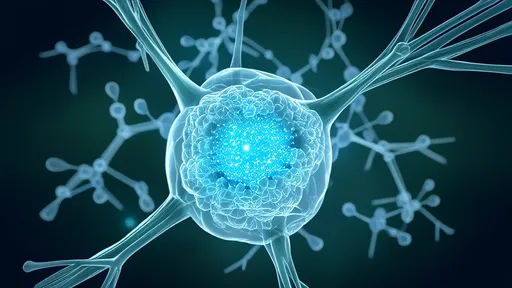
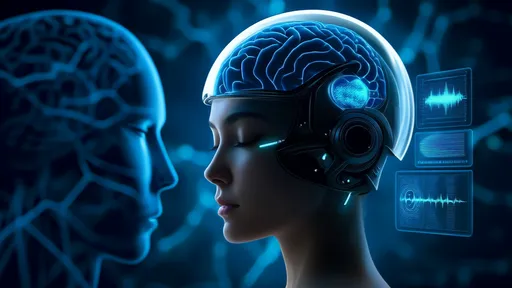
In the quiet hours of the night, as the world outside slows to a hush, the human brain embarks on a complex journey through various stages of sleep. Among these, deep sleep—often referred to as slow-wave sleep—stands out as a critical phase for physical restoration, memory consolidation, and overall well-being. Recent advancements in neuroscience have unveiled the potential of sound waves to gently guide the brain into this elusive state, offering a non-invasive solution to the growing epidemic of sleep deprivation.

The concept of using auditory stimulation to influence brain activity is not entirely new, but the precision with which modern technology can now target specific sleep phases is revolutionary. Researchers have discovered that certain sound frequencies, when timed correctly, can synchronize with the brain's natural oscillations during deep sleep. This phenomenon, known as entrainment, allows external stimuli to subtly nudge neural patterns toward restorative slow-wave activity without disrupting the sleeper.

At the heart of this innovation lies a delicate interplay between biology and acoustics. The brain produces distinct electrical patterns throughout the night, measured as brain waves by electroencephalography (EEG). During deep sleep, these waves slow considerably to between 0.5 and 4 Hz—a rhythm that appears crucial for the body's repair processes. Scientists have found that presenting pulsed auditory tones at these same frequencies can enhance the amplitude and duration of slow waves, effectively amplifying the benefits of this sleep stage.

What makes this approach particularly remarkable is its elegance compared to pharmaceutical interventions. Where sleeping pills often come with side effects and the risk of dependency, sound-based stimulation works with the brain's innate mechanisms. The tones are typically delivered through soft headphones or bedside speakers, designed to be barely perceptible yet precisely calibrated to match the individual's ongoing brain activity. Some systems even employ real-time EEG monitoring to adjust the auditory cues moment by moment, creating a responsive feedback loop between technology and biology.

The implications of this research extend far beyond helping occasional insomniacs. Chronic sleep deprivation has been linked to a host of serious health conditions, including cardiovascular disease, diabetes, and neurodegenerative disorders. By enhancing the quality—not just the quantity—of sleep through acoustic stimulation, we may be looking at a preventive healthcare measure with profound long-term benefits. Early studies suggest particular promise for older adults, who naturally experience diminished slow-wave sleep, and for individuals recovering from brain injuries where restorative sleep plays a crucial healing role.

As this field evolves, we're seeing the emergence of consumer devices that bring laboratory-grade sleep enhancement into the home. These range from simple apps that play predetermined tone sequences to sophisticated systems incorporating machine learning to personalize the auditory experience night after night. The technology has reached a point where some devices can detect when the wearer is entering light sleep and deliver precisely timed pulses to facilitate the transition into deeper stages.

Yet challenges remain in perfecting this technology. Individual variability in brain wave patterns means that a one-size-fits-all approach may not yield optimal results for everyone. There's also the question of how long the benefits persist—whether the brain might adapt to continuous stimulation or whether the enhanced sleep quality continues indefinitely. Ongoing research is exploring these questions while refining the parameters of sound delivery for maximum efficacy.

The intersection of neuroscience and acoustic technology opens fascinating possibilities for enhancing one of life's most fundamental biological processes. As we continue to unravel the mysteries of sleep, the ability to gently steer our brain waves toward more restorative patterns represents a significant leap forward in our quest for better health through better sleep. This non-pharmacological approach aligns with the body's natural rhythms rather than overriding them, offering a harmonious solution to the modern world's sleep crisis.

Recommend Posts
Science

Gravitational Wave Standard Candles: A New Ruler for the Expansion Rate of the Universe

By /Jul 28, 2025

The universe is expanding, but how fast? This question has puzzled astronomers for decades, and the answer holds the key to understanding the fate of the cosmos. Traditional methods of measuring the expansion rate, known as the Hubble constant, have relied on electromagnetic observations—such as supernovae or cosmic microwave background radiation. But now, a revolutionary approach is emerging: gravitational waves as "standard sirens." These ripples in spacetime, first predicted by Einstein and directly detected in 2015, are offering an entirely new way to gauge the universe's growth.
Science

Cold Atom Gravity Imaging: Millimeter-Level Mapping of Suburban Underground Cavities

By /Jul 28, 2025

In a groundbreaking leap for urban infrastructure monitoring, scientists have pioneered the use of cold atom gravity imaging to detect subsurface voids with unprecedented millimeter-scale precision. This cutting-edge technology, once confined to fundamental physics laboratories, is now rewriting the rules of how cities map their underground landscapes. The implications extend far beyond traditional ground-penetrating radar capabilities, offering a paradigm shift in identifying sinkholes, abandoned tunnels, and other hidden hazards beneath our feet.
Science

Diamond Nitrogen Vacancy Sensing: Single Neuron Magnetic Field Monitoring in Living Organisms

By /Jul 28, 2025

In a groundbreaking development that bridges quantum sensing and neuroscience, researchers have successfully demonstrated the use of diamond nitrogen-vacancy (NV) centers to detect magnetic fields generated by individual neurons in living organisms. This unprecedented achievement opens new frontiers in understanding neural activity at its most fundamental level, offering a non-invasive window into the brain's intricate electrical symphony.
Science

Quantum Entanglement of Phonons: Superconducting Manipulation of Silicon Chip Vibrations

By /Jul 28, 2025

In a groundbreaking development that could redefine the future of quantum computing and silicon-based technologies, researchers have achieved unprecedented control over superconducting manipulation of silicon chip vibrations through phonon quantum entanglement. This revolutionary approach merges the worlds of solid-state physics and quantum mechanics, opening doors to ultra-precise control of mechanical systems at the quantum level.
Science

Observations of Shock Collisions at the Heliopause in the Solar System

By /Jul 28, 2025

The boundary of our solar system is a turbulent and dynamic region where the Sun's influence wanes, and interstellar space begins to dominate. Recent observations of shock collisions at the heliopause—the outer edge of the heliosphere—have provided unprecedented insights into the complex interactions between solar wind plasma and the interstellar medium. These findings are reshaping our understanding of how the Sun's protective bubble interacts with the galaxy.
Science

Oculomotor Nerve Diagnosis: An Early Marker for Alzheimer's Disease

By /Jul 28, 2025

For decades, the diagnosis of Alzheimer’s disease has relied on a combination of cognitive assessments, brain imaging, and sometimes invasive procedures like spinal taps. But what if the eyes—often called the window to the soul—could also serve as a window to the brain? Recent breakthroughs in neuroscience suggest that subtle changes in eye movement patterns may hold the key to detecting Alzheimer’s disease long before memory lapses become apparent. This discovery could revolutionize early intervention strategies, offering hope for millions at risk of this devastating condition.
Science

Exhalation Cancer Diagnosis: Nanosensor Array for Lung Cancer Screening

By /Jul 28, 2025

The field of medical diagnostics is undergoing a quiet revolution, with breath analysis emerging as a promising frontier for early cancer detection. Among the most exciting developments is the application of nanosensor arrays for lung cancer screening through exhaled breath. This non-invasive approach could transform how we detect one of the world's deadliest cancers, offering hope for earlier intervention and improved survival rates.
Science

Phage-Directed Evolution: Smart Missiles to Combat Superbugs

By /Jul 28, 2025

In the relentless battle against antibiotic-resistant superbugs, scientists have turned to nature’s own precision weapon—bacteriophages. These microscopic viruses, which exclusively target and destroy bacteria, are now at the forefront of a revolutionary approach: directed evolution. By harnessing the power of phage therapy and accelerating their adaptation through cutting-edge techniques, researchers are crafting what some call "intelligent missiles" to combat deadly infections where traditional antibiotics fail.
Science

Asteroid Magnetic Fossils: Evidence of Primitive Planetesimal Dynamos

By /Jul 28, 2025

In the vast expanse of our solar system, remnants of its earliest days linger in the form of asteroids—celestial time capsules preserving clues about planetary formation. Among these clues, a particularly intriguing discovery has emerged: fossilized magnetic fields within certain asteroids, believed to be remnants of ancient dynamos within primordial planetesimals. This revelation opens a new window into understanding how small bodies contributed to the building blocks of planets.
Science

Lunar Ice Trap Drilling: Purity Analysis of Water Ice in Permanently Shadowed Regions

By /Jul 28, 2025

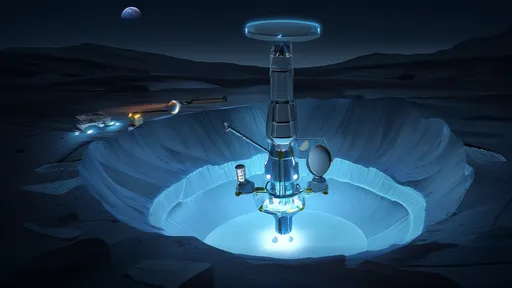
The exploration of water ice on the Moon has long been a focal point for scientists and space agencies worldwide. Recent advancements in drilling technology have enabled researchers to probe the permanently shadowed regions (PSRs) of the lunar poles, where water ice is believed to exist in significant quantities. These areas, shielded from the Sun's rays, act as natural cold traps, preserving volatile compounds for potentially billions of years. The latest missions have not only confirmed the presence of water ice but have also begun to analyze its purity—a critical factor for future lunar colonization and deep-space exploration.
Science

Photon Quantum Memory: Solid-State Lattice Confinement of Light Pulses

By /Jul 28, 2025

In a groundbreaking development that could reshape quantum communication networks, researchers have demonstrated the first successful implementation of solid-state lattice trapping for photonic quantum memory. This technique, often referred to as "optical pulse imprisonment," enables the storage and retrieval of fragile quantum information carried by light pulses within crystalline structures at room temperature. The achievement marks a significant leap toward practical quantum repeaters and long-distance quantum communication systems.
Science

Real-time Warning of Dehydration Risk for Athletes with Electrolyte Sweat Patches

By /Jul 28, 2025

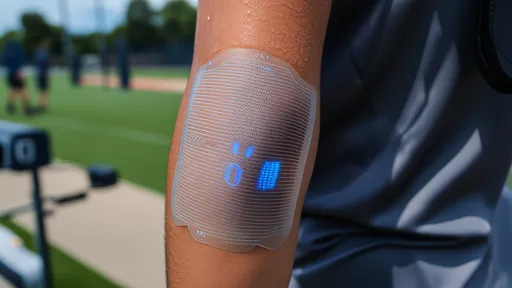
In the high-stakes world of competitive sports, even marginal dehydration can mean the difference between victory and defeat. Now, a groundbreaking wearable technology is revolutionizing how athletes monitor their hydration status. Sweat electrolyte patches, once confined to research labs, are emerging as a game-changing tool for real-time dehydration risk assessment.
Science

Mitochondrial Transplantation 2.0: Cross-Species Adaptation of Stem Cell Energy Factories

By /Jul 28, 2025

The field of mitochondrial transplantation has entered a bold new phase with the advent of what researchers are calling "Mitochondrial Transplantation 2.0." This cutting-edge approach moves beyond early experimental therapies by leveraging stem cells as universal donors for these vital energy-producing organelles. At its core, the technology challenges biological boundaries through cross-species compatibility – a concept that could rewrite textbooks on cellular compatibility.
Science

Intelligent Toilet Health Device: Daily Monitoring of Gut Microbiome

By /Jul 28, 2025

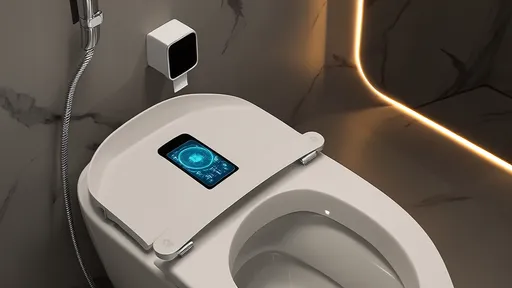
The integration of smart technology into personal healthcare has reached a new frontier with the advent of intelligent toilets equipped with health monitoring capabilities. Among the most groundbreaking features is the ability to perform daily assessments of gut microbiota—the complex ecosystem of microorganisms residing in our digestive tracts. This innovation promises to revolutionize how individuals track their digestive health, offering insights that were once only accessible through clinical tests.
Science

Non-Invasive Ultrasound Brain-Computer Interface: Reading Deep Brain Region Neural Signals

By /Jul 28, 2025

For decades, the field of brain-computer interfaces (BCIs) has been dominated by technologies that require invasive procedures to access high-resolution neural data. Electrodes implanted directly into the brain have provided remarkable insights and control, but their clinical risks and limitations have kept them from widespread use. Now, a groundbreaking approach using ultrasound is challenging the status quo, offering a way to read deep brain activity without surgery.
Science

Sleep Brainwave Modulation: Sonic Induction of Deep Sleep Phase

By /Jul 28, 2025

In the quiet hours of the night, as the world outside slows to a hush, the human brain embarks on a complex journey through various stages of sleep. Among these, deep sleep—often referred to as slow-wave sleep—stands out as a critical phase for physical restoration, memory consolidation, and overall well-being. Recent advancements in neuroscience have unveiled the potential of sound waves to gently guide the brain into this elusive state, offering a non-invasive solution to the growing epidemic of sleep deprivation.
Science

Pausing the Aging Clock: The Safe Window for Epigenetic Reprogramming

By /Jul 28, 2025

In a groundbreaking development that could redefine longevity research, scientists have identified a critical safety threshold for epigenetic reprogramming—a technique capable of reversing cellular aging. The discovery addresses one of the field’s most pressing challenges: how to rejuvenate cells without triggering uncontrolled growth or cancer. This delicate balance, now termed the "therapeutic window," could pave the way for safer anti-aging interventions.
Science

Topological Quantum Simulator: Fractional Quantum Hall Effect in Nine-Dimensional Space

By /Jul 28, 2025

In a groundbreaking development that pushes the boundaries of quantum physics, researchers have successfully simulated the fractional quantum Hall effect (FQHE) in a nine-dimensional space using topological quantum simulators. This achievement not only deepens our understanding of exotic quantum states but also opens new avenues for exploring high-dimensional topological phenomena that were previously inaccessible in laboratory settings.
Science

Exoplanetary Geologic Map: Tidal-Locked Thermal Imaging of Lava Oceans

By /Jul 28, 2025

The discovery of exoplanets has revolutionized our understanding of planetary systems beyond our own. Among the most intriguing findings are tidally locked worlds with vast lava oceans, their surfaces perpetually scorched by the relentless glare of their host stars. Recent thermal imaging studies have peeled back the curtain on these infernal landscapes, revealing dynamic geological processes that challenge our terrestrial perspectives.
Science

The Trajectory of Tidal Streams from Dwarf Galaxies in the Galactic Dark Matter Web

By /Jul 28, 2025

The Milky Way, our cosmic home, is not just a collection of stars, planets, and gas. It is also shrouded in an invisible web of dark matter, a mysterious substance that makes up the majority of the galaxy’s mass. Recent studies have begun to unravel the intricate dance of dwarf galaxies and their tidal streams as they move through this dark matter framework, offering new insights into the hidden architecture of our galaxy.