As the planet's climate continues to undergo significant shifts, the natural world is responding in ways both subtle and profound. Among the most telling indicators of these changes are the behavioral adjustments observed in animal species across the globe. Migration, a deeply ingrained instinct for countless creatures, is being reshaped not over millennia, but within mere decades, forcing scientists and conservationists to rethink traditional models of animal movement and survival.
The intricate dance of migration, honed over generations to maximize survival and reproductive success, is now being thrown into disarray. For species like the Arctic tern, whose pole-to-pole journey is the longest of any animal, the very cues that once guaranteed a successful trip are becoming unreliable. Warmer temperatures are causing ice to melt earlier at the poles and in mountainous regions, which in turn affects the availability of food sources at critical stopover points. Birds arriving at their traditional resting grounds may find the insect hatches have already peaked or that the berries have ripened and fallen weeks ahead of schedule. This temporal mismatch between arrival and resource availability can lead to catastrophic breeding failures, as parents are unable to gather enough food for their hungry chicks.
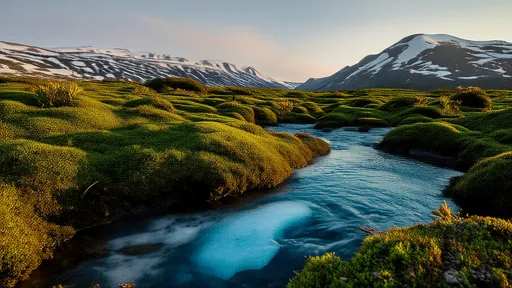
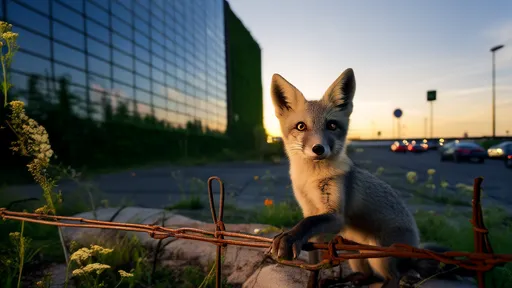
It is not just the timing that is changing; the very geography of migration is being redrawn. Some species are drastically shortening their journeys. Certain populations of barn swallows in Europe, for instance, are now overwintering in the Mediterranean instead of undertaking the perilous crossing into Africa. This behavioral shift conserves precious energy but brings them into competition with resident species and into closer contact with human populations, with unpredictable consequences. Conversely, other animals are being pushed to travel further than ever before. As warming temperatures compress their suitable habitats toward higher latitudes and elevations, species like the North American moose are being forced to roam farther north in search of the cool, boreal forests they call home.
Perhaps one of the most alarming trends is the complete abandonment of migration by some species. Why embark on a dangerous and energetically costly journey if suitable conditions can be found year-round in what was once just a summer breeding ground? This is the calculation being made by some American robins. Historically, these birds would flee south to escape harsh northern winters. Now, with milder winters and more reliable food sources from ornamental berry bushes in suburban areas, many are choosing to stay put. This sedentarization removes a key pressure that shaped their evolution and could, over time, lead to genetic changes and a loss of the migratory instinct altogether.
The mechanisms behind these shifts are as complex as the behaviors themselves. Animals rely on a suite of environmental signals—photoperiod (day length), temperature, precipitation, and even the Earth's magnetic field—to know when to depart, which route to take, and when to stop. Climate change is scrambling these signals. A warm spell in late winter might trigger an early departure, only for a sudden cold snap to wipe out early migrants. Furthermore, the pace of change is simply too rapid for genetic adaptation to keep up. Instead, we are largely observing phenotypic plasticity—individual animals altering their behavior within their lifetime in response to immediate conditions. While this flexibility offers a buffer, it has its limits.
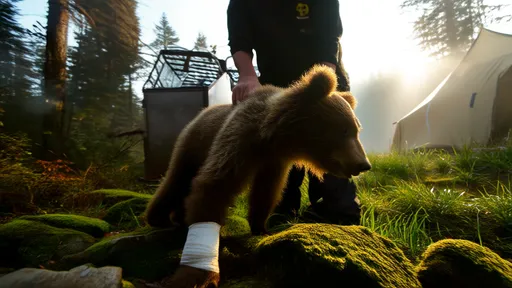
The repercussions of these altered migrations ripple through entire ecosystems. Migratory animals are often keystone species, playing a critical role in the health of the environments they travel between. They pollinate plants, disperse seeds, and control prey populations. When a hummingbird changes its route, the flowers it once pollinated may suffer. When salmon runs are diminished or mistimed due to altered river temperatures and flows, the bears and forests that depend on their nutrient-rich carcasses are starved of a vital resource. The disruption of these ancient cycles weakens ecological networks, making them less resilient to further change.
For humans, the impacts are equally tangible. altered migration patterns disrupt billion-dollar industries like commercial fishing, as fish stocks move unpredictably into new territorial waters. They also complicate international conservation efforts, as animals move beyond the boundaries of protected areas and into zones of conflict or heavy human use. Furthermore, changing animal movements have direct implications for public health. Shifts in the migration of birds, which are reservoirs for diseases like West Nile virus and avian influenza, can introduce pathogens to new regions and populations.
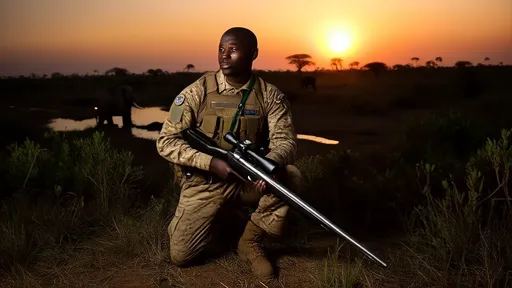
In the face of this silent, global reorganization of life, the challenge for conservation is immense and urgent. Static nature reserves, designed to protect species in a specific location, are becoming obsolete for migratory animals whose paths are in constant flux. The new imperative is to protect connectivity—the corridors of land, sea, and sky that link summer and winter grounds. This requires unprecedented levels of international cooperation and the creation of dynamic, flexible management plans that can adapt as the animals themselves do. Scientists are increasingly turning to advanced satellite tracking and citizen science data to map these new routes in real-time, providing the essential intelligence needed for effective protection.
The altered migrations of the animal kingdom are a stark and unequivocal barometer of a world out of balance. They represent a desperate, often ingenious, struggle for survival in the face of a challenge unlike any other in Earth's recent history. Each shortened journey, each abandoned route, and each new path charted across the sky is a story of adaptation, but also a warning. How we choose to respond—by tearing down barriers and forging new alliances in conservation, or by clinging to old maps and outdated methods—will determine not only the fate of these incredible travelers but the overall health and stability of the biosphere we all share.
By /Aug 21, 2025
By /Aug 21, 2025
By /Aug 21, 2025
By /Aug 21, 2025
By /Aug 21, 2025
By /Aug 21, 2025
By /Aug 21, 2025
By /Aug 21, 2025
By /Aug 21, 2025

By /Aug 21, 2025
By /Aug 21, 2025
By /Aug 21, 2025
By /Aug 21, 2025
By /Aug 21, 2025
By /Aug 21, 2025
By /Aug 21, 2025
By /Aug 21, 2025
By /Aug 21, 2025
By /Aug 21, 2025
By /Aug 21, 2025
