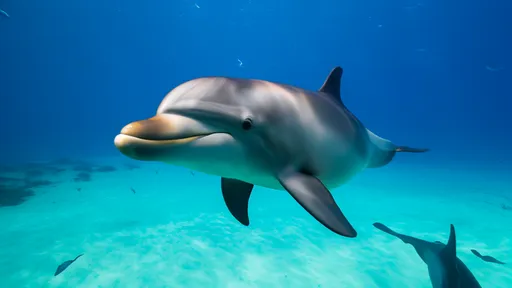
In the vast and mysterious depths of the world's oceans, marine mammals have long captivated human imagination with their intelligence and complex behaviors. Among these creatures, dolphins stand out as particularly fascinating subjects of study, not only for their playful antics and social structures but also for their remarkable cognitive abilities. Research into dolphin cognition has steadily advanced over the decades, revealing insights that challenge our understanding of consciousness and self-awareness in non-human animals. These findings not only enrich our knowledge of marine life but also provoke deeper ethical and philosophical questions about our relationship with other intelligent beings on this planet.
One of the most compelling areas of dolphin research centers on the concept of self-awareness. Traditionally, self-awareness was considered a uniquely human trait, but studies have increasingly demonstrated that dolphins possess a level of self-recognition and introspective capability that parallels that of great apes and elephants. The mirror test, a classic experiment designed to assess self-awareness in animals, has been instrumental in this discovery. When exposed to mirrors, dolphins have been observed using them to inspect parts of their bodies that are not normally visible, such as the inside of their mouths or markings placed on their skin by researchers. This behavior suggests not only an understanding that the reflection is of themselves but also an ability to use the mirror as a tool for self-exploration, a cognitive leap that implies a sophisticated sense of identity.
Beyond mirror self-recognition, dolphins exhibit a range of behaviors that point to advanced cognitive functions. Their communication systems, for instance, are incredibly complex, involving a repertoire of clicks, whistles, and body language that some scientists argue may constitute a form of language. While the debate over whether dolphins have a true language continues, there is no denying that their vocalizations are used for coordination, social bonding, and even individual identification—each dolphin has a unique signature whistle that functions like a name. This capacity for referential communication underscores their ability to think abstractly and to recognize themselves and others as distinct entities with roles and relationships within their pods.
Social structures among dolphins further illuminate their cognitive sophistication. Dolphins live in dynamic, fission-fusion societies where group compositions change frequently, requiring individuals to remember and manage multiple relationships. This social complexity demands advanced memory, empathy, and even deception—traits associated with higher intelligence. Observations have documented dolphins cooperating to achieve common goals, such as hunting or protecting group members from predators, and engaging in behaviors that suggest altruism and teaching. For example, mother dolphins have been seen guiding their calves in learning hunting techniques, indicating cultural transmission of knowledge, a hallmark of advanced cognition.
The study of dolphin brains provides a neurological basis for these cognitive abilities. Dolphin brains are large relative to their body size, with a highly developed neocortex—the region associated with higher-order thinking, problem-solving, and consciousness. Their encephalization quotient (a measure of brain size relative to body mass) is second only to humans among animals, surpassing that of great apes. This neuroanatomy supports complex behaviors such as self-awareness, memory, and emotional processing. Additionally, research has identified spindle neurons in dolphin brains, which are linked to empathy, social cognition, and rapid intuitive reasoning in humans. The presence of these neurons suggests that dolphins may experience emotions and social bonds in ways that are strikingly similar to our own.
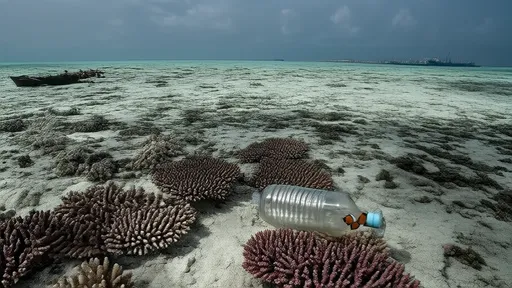
Ethical considerations arising from dolphin cognition research cannot be overlooked. As evidence mounts regarding their intelligence and self-awareness, questions about the treatment of dolphins in captivity and in the wild become increasingly urgent. Many countries have begun to recognize dolphins as non-human persons with rights, leading to bans on captive dolphin shows and breeding programs. The implications extend to conservation efforts, as understanding dolphin cognition highlights their vulnerability to human activities such as fishing, pollution, and climate change. Protecting these intelligent beings requires not only legal frameworks but also a shift in human perception—acknowledging that we share the planet with other conscious entities deserving of respect and moral consideration.
Looking forward, the field of marine mammal cognition continues to evolve with new technologies and methodologies. Non-invasive techniques like drone observations, underwater audio recording, and advanced imaging are opening up unprecedented opportunities to study dolphins in their natural habitats without disturbance. These tools allow researchers to gather data on social interactions, communication patterns, and problem-solving in realistic contexts, providing a more comprehensive understanding of their cognitive world. Interdisciplinary collaborations between marine biologists, neuroscientists, and ethicists are essential to advancing this research and addressing the complex questions it raises.
In conclusion, the study of self-awareness in dolphins and other marine mammals reveals a depth of intelligence that challenges anthropocentric views of consciousness. From mirror self-recognition and complex communication to social learning and neurological sophistication, dolphins demonstrate cognitive abilities that invite us to rethink the boundaries of mind in the animal kingdom. As research progresses, it not only deepens our appreciation for these remarkable creatures but also compels us to reflect on our responsibilities toward them. The oceans hold mysteries that continue to inspire awe and curiosity, and in understanding dolphins, we may come to better understand ourselves and our place in the natural world.
By /Aug 21, 2025
By /Aug 21, 2025

By /Aug 21, 2025
By /Aug 21, 2025
By /Aug 21, 2025
By /Aug 21, 2025
By /Aug 21, 2025

By /Aug 21, 2025

By /Aug 21, 2025

By /Aug 21, 2025
By /Aug 21, 2025
By /Aug 21, 2025
By /Aug 21, 2025

By /Aug 21, 2025
By /Aug 21, 2025

By /Aug 21, 2025
By /Aug 21, 2025

By /Aug 21, 2025

By /Aug 21, 2025

By /Aug 21, 2025
