In the quiet moments of dawn, as the first light filters through the trees, a familiar black silhouette often perches on a branch, observing the world with an unsettling intelligence. For centuries, crows and their corvid relatives have been woven into our folklore and myths, often as omens or tricksters. Yet, it is only in recent decades that science has begun to unravel the true depth of their cognitive abilities, revealing that these birds are not merely instinct-driven creatures but possess a problem-solving prowess that rivals that of many mammals, including in some cases, young children.
The study of avian intelligence, particularly in corvids like crows, ravens, and jays, has fundamentally challenged our understanding of the animal mind. The long-held belief that a large mammalian brain was a prerequisite for complex cognition has been steadily dismantled by a growing body of evidence. Birds, with their dramatically different neural architecture—lacking a neocortex but possessing a densely packed pallium—have demonstrated that intelligence can evolve along multiple, parallel paths. This convergence of cognitive ability, despite vast anatomical differences, suggests that the pressures of social living, foraging, and survival can produce sophisticated minds in a variety of forms.
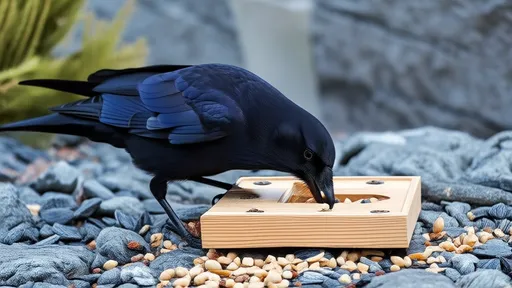
One of the most captivating demonstrations of corvid intelligence is their use of tools. The New Caledonian crow stands as the avian equivalent of a master engineer. In controlled laboratory settings, these crows have been observed not just using found objects as tools, but manufacturing them. They meticulously sculpt hooks from twigs and serrated tools from pandanus leaves, displaying a foresight and understanding of physical properties that was once thought to be uniquely human. They can solve multi-step puzzles that require them to use one tool to retrieve another, which is then used to obtain a food reward. This sequential tool use indicates an ability to plan several steps ahead, a hallmark of advanced problem-solving.
Beyond physical puzzles, their social intelligence is equally formidable. Crows live in complex societies where they recognize individual humans, often holding grudges against those who have threatened them and warning their offspring and peers. This social learning is a powerful form of problem-solving in itself, allowing knowledge about dangers and opportunities to spread rapidly through a population. Their communication is nuanced, with different calls signifying different types of predators, effectively creating a language of danger. The ability to deceive and understand the perception of others, a cognitive trait known as theory of mind, is also under intense investigation in these birds, with some experiments suggesting they may understand what another individual can or cannot see.
The neurological basis for this intelligence is as fascinating as the behaviors themselves. The avian brain, while structurally different from the mammalian brain, is incredibly efficient. Neurons in the crow pallium are packed much more densely than in the cerebral cortex of primates. This means that a crow's walnut-sized brain can contain as many neurons as some monkey brains, effectively creating a powerful biological computer in a very compact space. This neural density, particularly in areas associated with higher-order thinking, provides the physical hardware for their complex cognitive software, allowing for flexible learning, memory, and innovation.
Memory plays a crucial role in their survival strategy. Many corvid species are scatter hoarders, caching thousands of food items across vast territories throughout the autumn to survive the lean winter months. The mental capacity required to remember not only the locations of these caches but also their quality, and even whether they were being watched by a potential thief when they hid them, is staggering. This is not a simple, rote memory but a complex, episodic-like memory system where they can recall the what, where, and when of past events, a ability once claimed to be a human exclusive.
In the face of rapid urbanization, corvids have not merely survived; they have thrived by applying their innate problem-solving skills to novel challenges. They have learned to drop hard-shelled nuts onto busy roads so that cars will crack them open. They have been observed waiting for traffic lights to turn red before safely retrieving their prize, demonstrating an understanding of cause and effect in a human-made environment. Some have even been seen placing lids on water dishes to prevent other birds from drinking, a clear example of resource control. This behavioral flexibility is the ultimate testament to their intelligence, showing an ability to adapt old solutions to new problems and even innovate entirely new ones.
The implications of this research extend far beyond simple curiosity. Understanding how another species thinks forces us to re-evaluate our place in the natural world. It challenges the anthropocentric view that complex consciousness and intelligence are our sole dominion. Furthermore, studying the problem-solving algorithms of the crow brain, a system that achieves so much with so little biological hardware, provides invaluable insights for fields like artificial intelligence and robotics. Engineers look to these natural systems for inspiration on creating efficient, adaptive machines.
As research continues, each experiment peels back another layer of the corvid mind, revealing ever-deeper complexities. The image of the crow is being transformed from a common pest or a mythical symbol into one of nature's most brilliant and adaptable problem-solvers. Their intelligence, forged by millions of years of evolution, is a powerful reminder that cognitive brilliance is not a singular path but a sprawling tree with many branches. In the clever, watchful eye of a crow, we are not looking at a simple animal, but at a distinct and formidable intelligence, one that has learned to solve the puzzles of a world it shares with us.

By /Aug 21, 2025
By /Aug 21, 2025

By /Aug 21, 2025

By /Aug 21, 2025
By /Aug 21, 2025

By /Aug 21, 2025
By /Aug 21, 2025

By /Aug 21, 2025
By /Aug 21, 2025

By /Aug 21, 2025
By /Aug 21, 2025
By /Aug 21, 2025

By /Aug 21, 2025

By /Aug 21, 2025
By /Aug 21, 2025

By /Aug 21, 2025
By /Aug 21, 2025
By /Aug 21, 2025

By /Aug 21, 2025

By /Aug 21, 2025
